Dimension measurement
Paper and cardboard
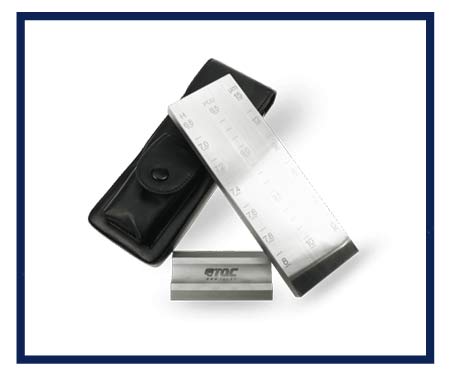
Name of the device: Grindometer
Application: To determine the size of particles and fine grains of most materials such as paints, varnishes, colored materials, fillers, etc.
Model: two grooves with graded slopes in 3 scales µm (micron), PCU (North), NS (Hegman)
manufacturing company: TQC Netherlands and NEURTEK Spain
Name of the device: SALT SPRAY
Manufacturer: GOTECH, Taiwan
Application: Creating conditions of salt fog to observe the degree of product degradation
Model: 108 liter, 270 liter and 400 liter
Viscosity cups
Application: The flow process (flow) inside an orifice is used to measure viscosity to determine the uniformity of paints, varnishes and other similar products. Viscosity cups are available in two fixed and variable nozzle models.
1- Fixed nozzle
2- Interchangeble nozzle
Density cup (pycnometer:
Application: The pycnometer is used to measure the specific gravity of each unit volume of coatings, adhesives or similar liquids at a temperature
Krebs viscometer:
Application: to measure the viscosity of paint and resin
Manufacturer: TQC Netherlands
Device specifications: Measurability: Ku, CP, g
Range: 40.2 – 141 KU (resolution 0.1 KU), 27 – 5274 cP (resolution 5 Cp)
Standard: ASTM D562-01, ASTM D856, ASTM D1131
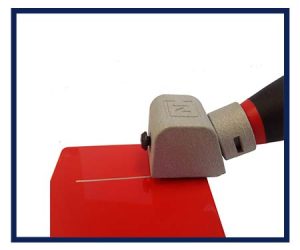
Name of the device: paint and coating hardness tester (paint and surface coating scratch test)
Application: It is a tool for testing the hardness and scratch resistance of coating materials such as coatings, lacquers, plastics, etc
Manufacturing company: TQC Netherlands and NEURTEK Spain and AMITTARI Hong Kong
Surface roughness meter or roughness test
Application: To determine the texture of the surface roughness, by determining the amount of vertical changes on the surface compared to the real smooth surface
Manufacturing company: Mitutoyo of Japan and NEURTEK of Spain and AMITTARI of Hong Kong
Model :
1-Sandblast roughness meter
2-Surface roughness gauge (Ra, Ry, Rz)
Roughness is a measure to determine the texture of the surface and it is determined by determining the amount of vertical changes on the surface compared to the actual smooth surface. If these changes are large, it has a rough surface, and if it is small, it is soft. Roughness plays an important role in determining the mutual effect of surfaces and by knowing it, many behaviors of mechanical components can be predicted. In the usual equipment for roughness measurement, which is known as roughness tester or roughness tester, contact method is used and a needle-like head moved on the surface according to the number of oscillations and maximum displacement can determine the surface roughness.
Name of the device: GLOSSMETER Application: To measure the surface gloss by measuring the amount of light absorption Manufacturing company: TQC Netherlands, NEURTEK Spain and AMITTARI Hong Kong Model: single angle (60°), two angles (20° / 60°) and three angles (20° / 60° / 85°)
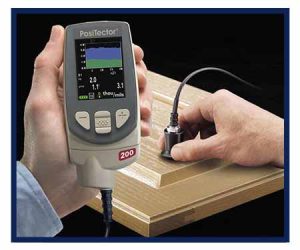
Thickness gauge of paint and coating, electroplating, galvanization, and electroplating based on metals
1- POSITECTOR 6000 model made by DEFELSKO company in America in head probe and separate probe models
Ferrous (F) series devices for measuring the thickness of paint, glaze, epoxy, phosphate, hot galvanized, hard, etc. are based on iron.
Non Ferrous (N) series devices for measuring the thickness of paint, glaze, epoxy, Teflon, anodizing, aluminum, etc. are non-ferrous based.
(FNF) series devices are thickness gauges for coating on ferrous and non-ferrous metals and have both high capabilities.
2- Thickness gauge of paint and coating and plating
Dual-purpose based on ferrous metals and non-ferrous metals (Fe/NFe)
Self-contained probe and separate probe made in China
Farvardin Kala Peyman
Company
Products
Contact us
All Rights Reserved by farvardin kala Designed by Navak